SANlight Dimming Strategies
Lab-Based Light Control for Maximum Efficiency
Light is one of the most critical factors in professional plant cultivation. With modern LED systems like those from SANlight, light is no longer a static value but an actively controllable parameter.
This blog presents results from an internal SANlight laboratory trial, demonstrating how targeted dimming during the flowering phase can influence yield, energy efficiency, and cannabinoid profile.
Why Light Dimming Matters in Modern Cultivation
Photosynthesis is not a linear process. Beyond a certain point, a plant can no longer fully convert additional light into biomass or secondary metabolites. Factors such as CO₂ availability, nutrient supply, temperature, and genetics limit light utilization.
Targeted dimming can therefore improve energy efficiency while potentially influencing plant stress responses in a positive way.
The SANlight Laboratory Trial
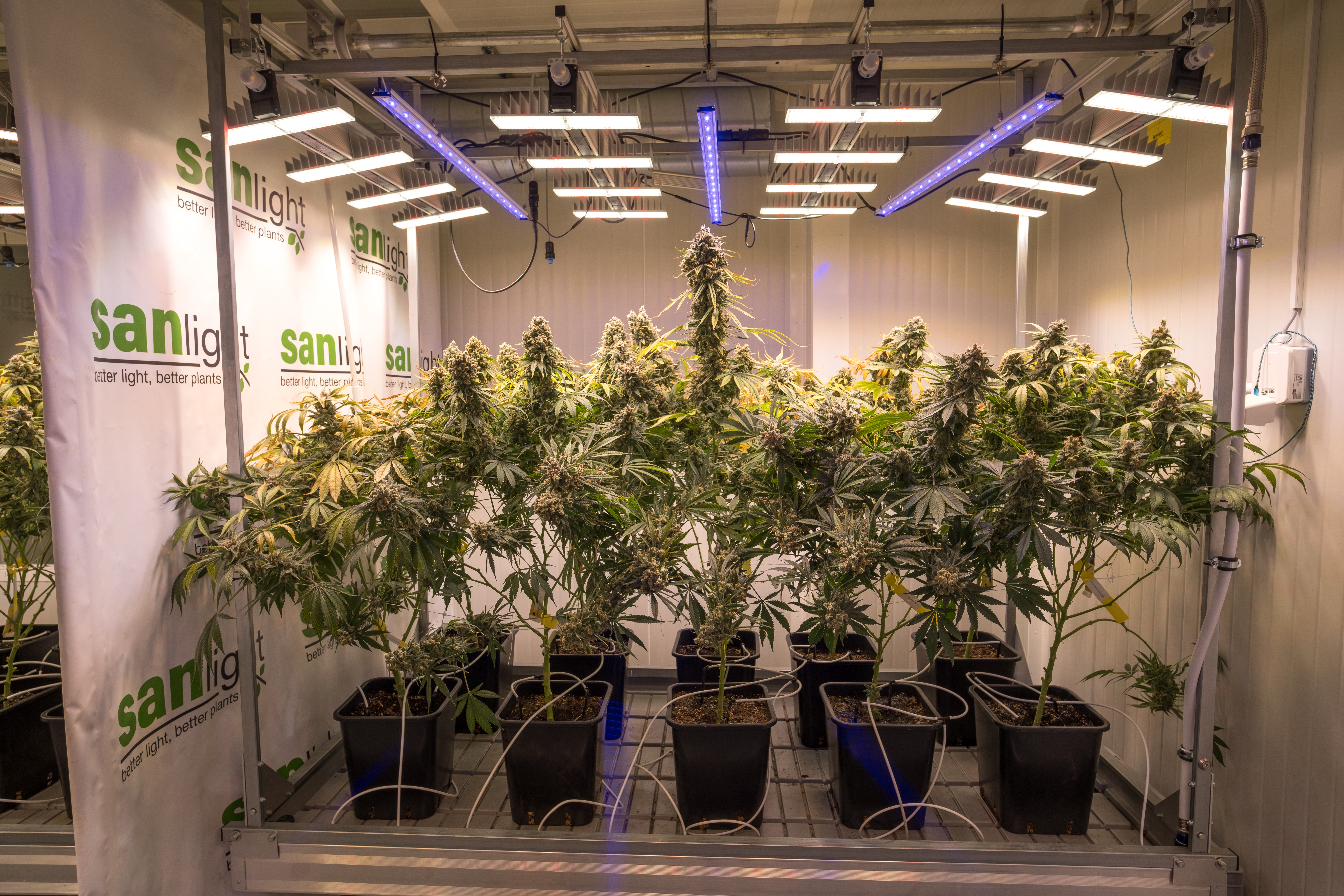
The trial was conducted in the SANlight controlled-environment laboratory. All environmental parameters were precisely regulated to eliminate external influences.
Trial Parameters:
Lighting: 4 × SANlight EVO 4-120 1.5 per 2 × 1 m area
Photoperiod: 12 h light / 12 h dark
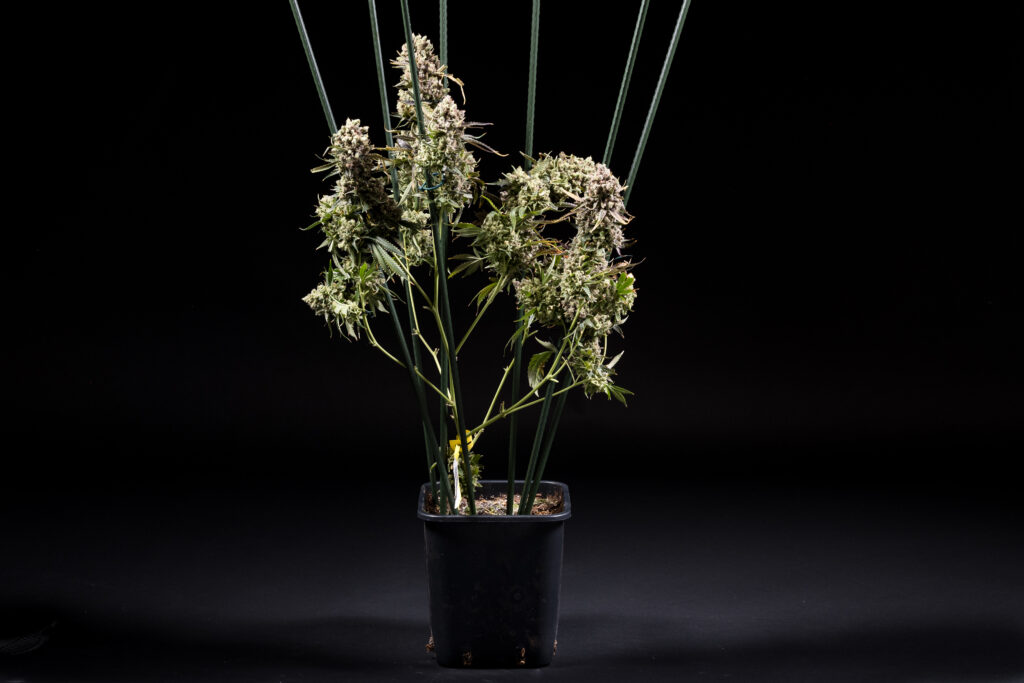
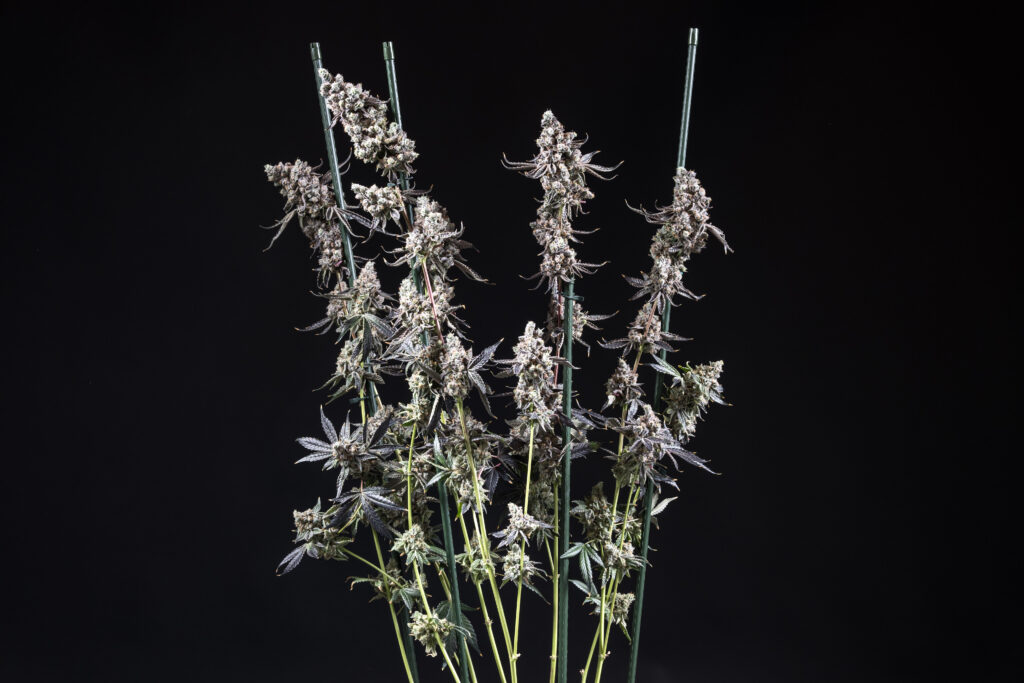
Genetics: Zombie Bride, Critical
Irrigation: Central drip irrigation with identical nutrient solution
Tested Dimming Strategy
Two lighting variants were compared:
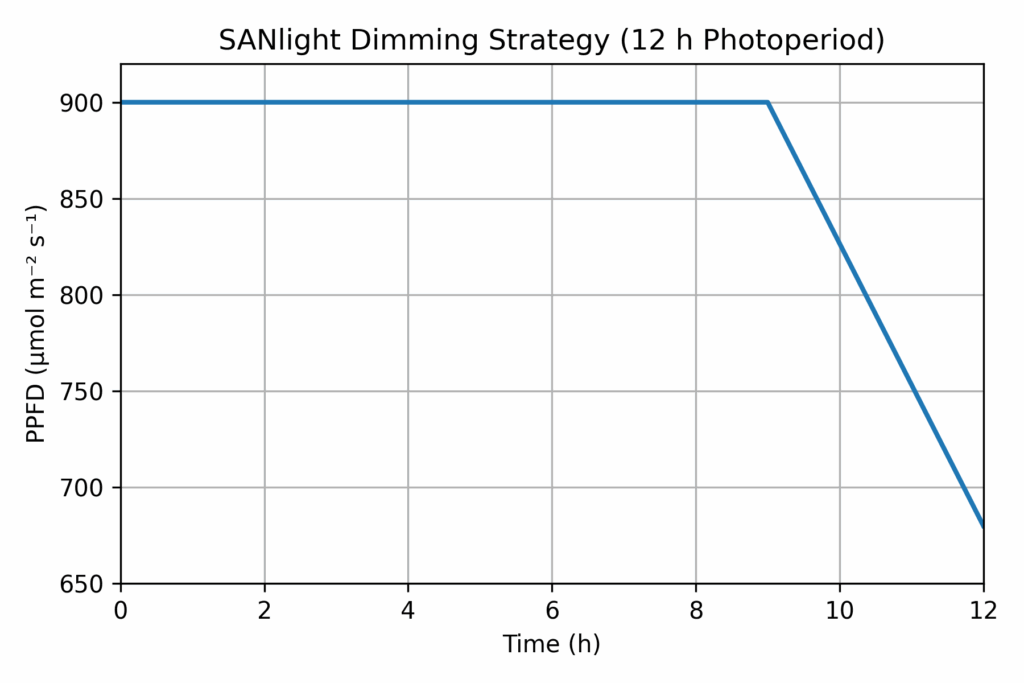
Constant: 900 µmol/m²/s for 12 hours
Dimmed: 900 µmol/m²/s for 9 hours, followed by a 25% reduction to 680 µmol/m²/s
Results: Yield and Energy Efficiency
The results clearly show that dimming is not a universal solution. The response to reduced light intensity was strongly cultivar-dependent.
Zombie Bride slightly benefited from the dimming strategy, showing both a marginally higher yield and improved energy efficiency (g/kWh).
Critical, however, reacted negatively to the reduced light intensity and achieved better results under constant lighting conditions.
Cannabinoids: Focus on THC
Regardless of yield development, a consistent effect was observed across both cultivars: THC levels were higher in the dimmed variant.
Cultivar | Strategy | Total CBD (CBD + CBDA) | Total THC (THC + THCA) | Total CBG (CBG + CBGA) | THCVA | CBNA |
|---|---|---|---|---|---|---|
Critical | 25% reduction after 9h | 0.041 | 19.0 | 0.752 | 0.140 | 0.067 |
Critical | 12h constant 900 µmol | 0.040 | 18.0 | 0.659 | 0.134 | 0.075 |
Zombie Bride | 25% reduction after 9h | 0.040 | 18.8 | 0.394 | 1.04 | 0.046 |
Zombie Bride | 12h constant 900 µmol | 0.036 | 17.0 | 0.365 | 0.934 | 0.046 |
This suggests that reduced light intensity in the later part of the day may either lower stress or favor metabolic processes contributing to cannabinoid formation.
Leaf Temperature – Theory and Practice
Part of the trial investigated whether leaf temperature could serve as an indicator of photosynthetic saturation. While a slight temperature increase was measurable after several hours of high PPFD exposure, the effect was minimal.
In practice, leaf temperature serves more as an analytical tool rather than a direct control parameter.
What Does This Mean for Growers?
Dimming strategies should always be evaluated within the overall cultivation context. In stable setups with controlled climate conditions and sufficient CO₂ supply, dimming can:
Reduce energy consumption
Improve efficiency
Influence product quality
However, cultivar-specific evaluation remains essential.
SANlight Dimming Options
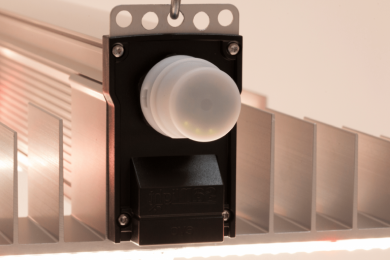
SANlight offers multiple solutions to implement such strategies:
BT Dimmer (20–100%, stepless)
M Dimmer (40 / 60 / 80 / 100%)
Adapter cables for GrowControl, TrolMaster, and AC Infinity
These allow easy implementation of time-based or controller-supported dimming profiles.
Conclusion
SANlight laboratory data show that targeted dimming can be an effective tool in professional cultivation. While it does not replace a well-designed setup, it offers valuable fine-tuning potential—particularly in terms of energy efficiency and product quality.